

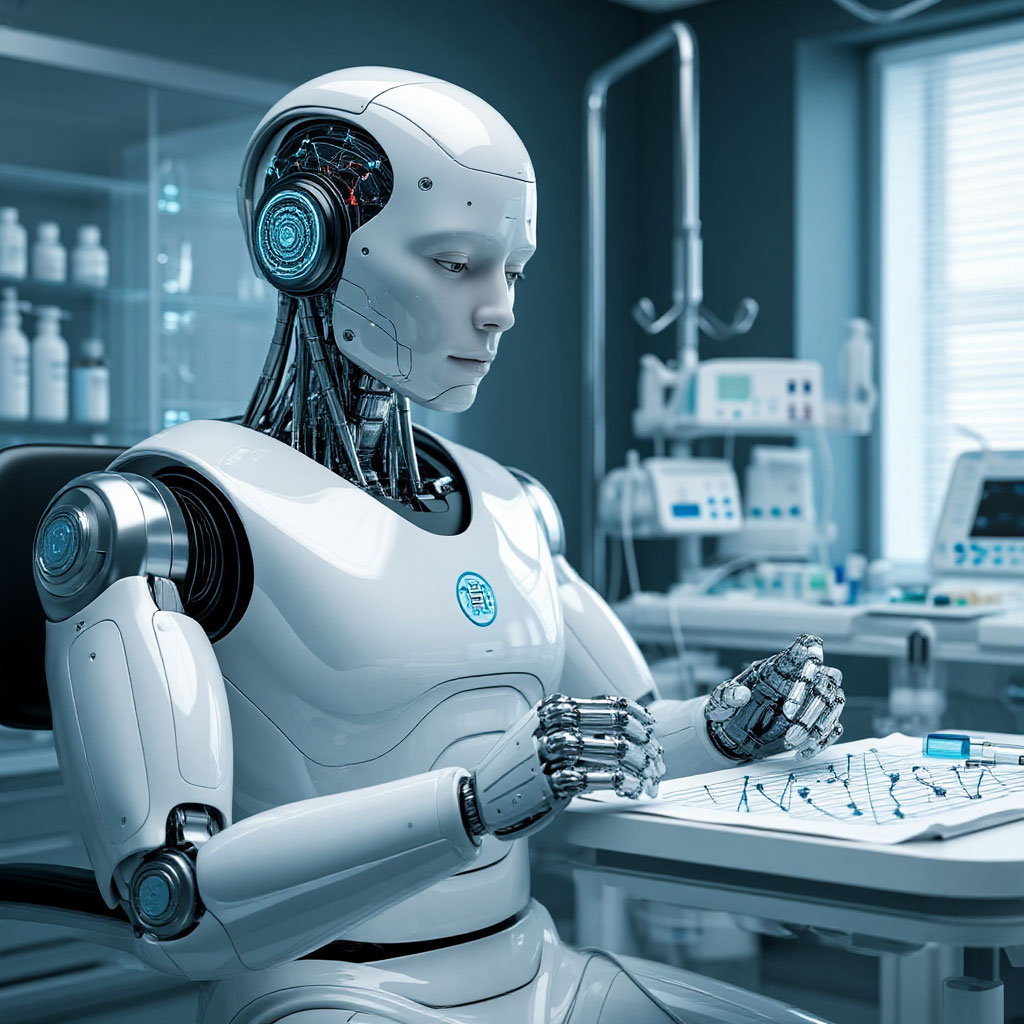
The Scalpel and the Algorithm: How AI is Reshaping Modern Medicine
The landscape of modern medicine is undergoing a seismic shift, driven not only by biological breakthroughs but by computational power. At the heart of this transformation lies Artificial Intelligence (AI), a technology that is moving from the realm of science fiction into the core of clinical practice. No longer just a futuristic concept, AI is becoming an indispensable partner to healthcare professionals, enhancing diagnostics, personalizing treatment, and streamlining operations to create a more efficient, precise, and proactive healthcare system.
From Reactive to Proactive: AI in Medical Imaging and Diagnostics
One of the most mature and impactful applications of AI is in medical imaging. Algorithms, particularly those using deep learning, are now being trained to read and interpret X-rays, MRIs, and CT scans with a level of speed and accuracy that can surpass the human eye.
- Enhanced Detection: AI systems can identify subtle patterns indicative of diseases like cancer, fractures, or neurological disorders that might be overlooked due to human fatigue or the sheer volume of data. For instance, AI models are now used to detect early signs of diabetic retinopathy from retinal scans and pinpoint tiny nodules in lung CT scans that could be early-stage lung cancer.
- Quantifying Workflow: By prioritizing critical cases and automating initial screenings, AI reduces the burden on radiologists, allowing them to focus their expertise on the most complex and urgent cases. This not only speeds up diagnosis but also ensures that life-threatening conditions are identified sooner.
The Era of Personalized Medicine
The “one-size-fits-all” approach to treatment is rapidly becoming obsolete. AI is the engine powering the shift towards personalized medicine by analyzing vast and complex datasets, including a patient’s genetic makeup, lifestyle, and environmental factors.
- Genomics and Drug Discovery: AI can sift through genomic data to identify mutations linked to specific diseases and predict an individual’s response to particular medications. In drug discovery, AI algorithms can analyze molecular structures to identify promising drug candidates in a fraction of the time and cost of traditional methods, accelerating the development of new therapies for complex conditions like Alzheimer’s and cancer.
- Tailored Treatment Plans: By integrating data from electronic health records (EHRs), wearable devices, and genetic tests, AI can help clinicians design highly personalized treatment plans. This ensures that patients receive the most effective interventions with the fewest side effects.
Optimizing Hospital Operations and Patient Care
Beyond the clinic and lab, AI is revolutionizing the administrative and operational backbone of healthcare.
- Predictive Analytics: Hospitals are using AI to predict patient admission rates, optimize staff scheduling, and manage inventory. More importantly, predictive models can identify patients at high risk of readmission or sepsis, enabling early intervention and improving patient outcomes.
- Virtual Health Assistants and Chatbots: AI-powered chatbots are providing 24/7 support to patients, answering routine questions, scheduling appointments, and offering medication reminders. This improves patient engagement and frees up clinical staff for more critical tasks.
- Automating Administrative Tasks: A significant portion of a clinician’s time is spent on documentation. AI-powered tools that use natural language processing can transcribe doctor-patient conversations and auto-populate EHRs, reducing administrative burnout and allowing for more meaningful patient interaction.
Challenges and the Road Ahead
Despite its immense potential, the integration of AI into medicine is not without challenges. Key concerns include:
- Data Privacy and Security: The use of vast amounts of sensitive patient data raises serious questions about privacy and protection against breaches.
- Algorithmic Bias: If AI models are trained on biased data, they can perpetuate and even amplify existing health disparities. Ensuring diverse and representative datasets is crucial.
- Regulation and Validation: Creating robust regulatory frameworks to validate the safety and efficacy of AI tools is essential for building trust among practitioners and patients.
- The Human Touch: AI is a tool to augment, not replace, human clinicians. The empathy, ethical judgment, and complex decision-making of a skilled doctor remain irreplaceable. The future lies in a collaborative model where AI handles data-driven tasks, and humans provide the critical thinking and compassionate care.
Conclusion
Artificial Intelligence is not a silver bullet, but it is a transformative force in modern medicine. It is empowering healthcare providers to make more accurate diagnoses, develop highly personalized treatments, and operate more efficient systems. As we navigate the ethical and practical challenges, the collaboration between human expertise and artificial intelligence promises a future where medicine is not only more advanced but also more humane, accessible, and effective for all. The scalpel has been joined by the algorithm, and together, they are carving out a new era of health and healing.